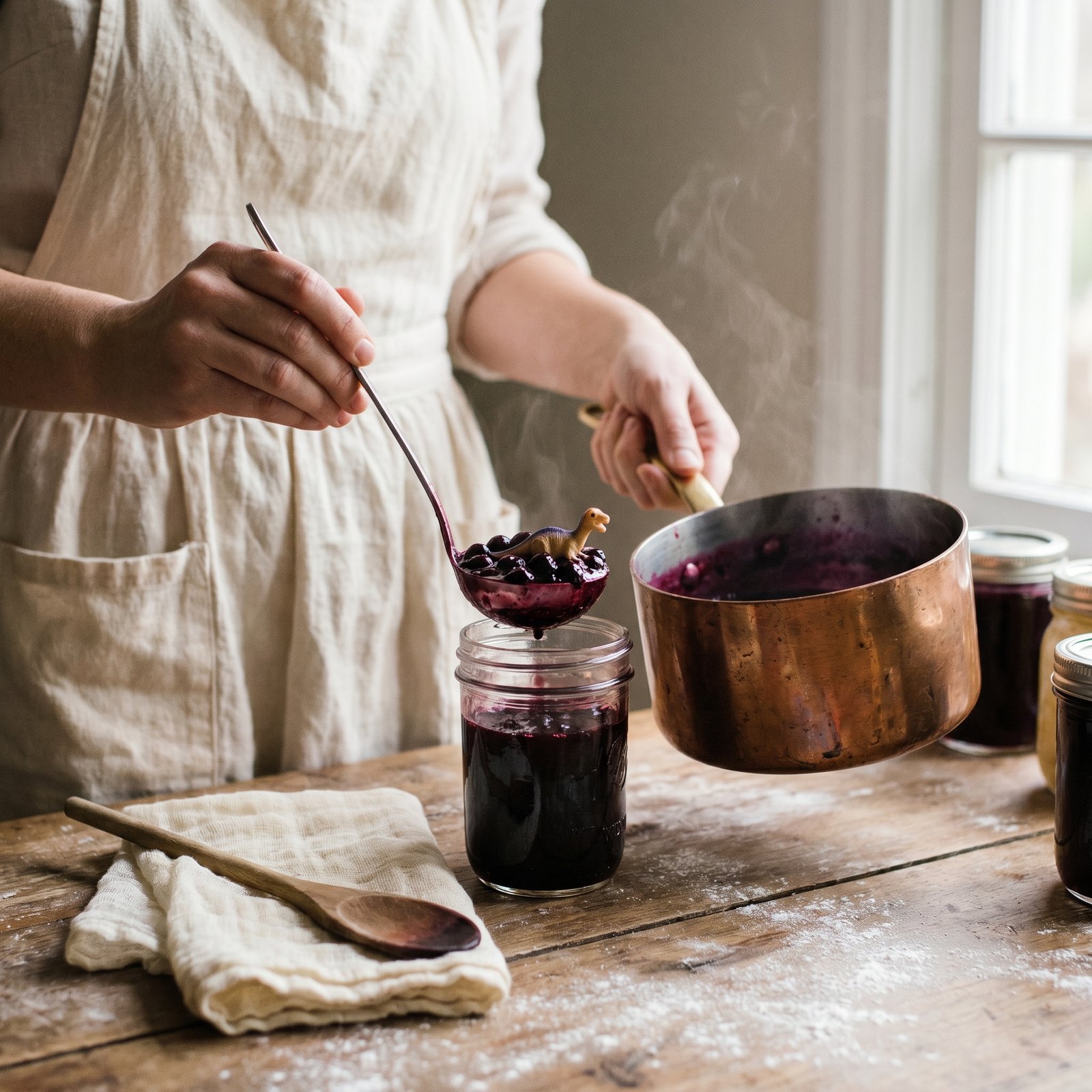
In our letters from readers — and we read them all — a question arrives with some frequency: what, exactly, is the difference between a jam, a jelly, a preserve, a conserve, and a marmalade? The answer is kinder than you might expect. The follow-up question, which asks where Almost Fruit belongs among them, is a little more complicated.
The short version
Jelly is clear. Jam is opaque. Preserves contain fruit visible to the eye. Conserves are preserves with nuts or dried fruit. Marmalade is a preserve of citrus, including the peel.
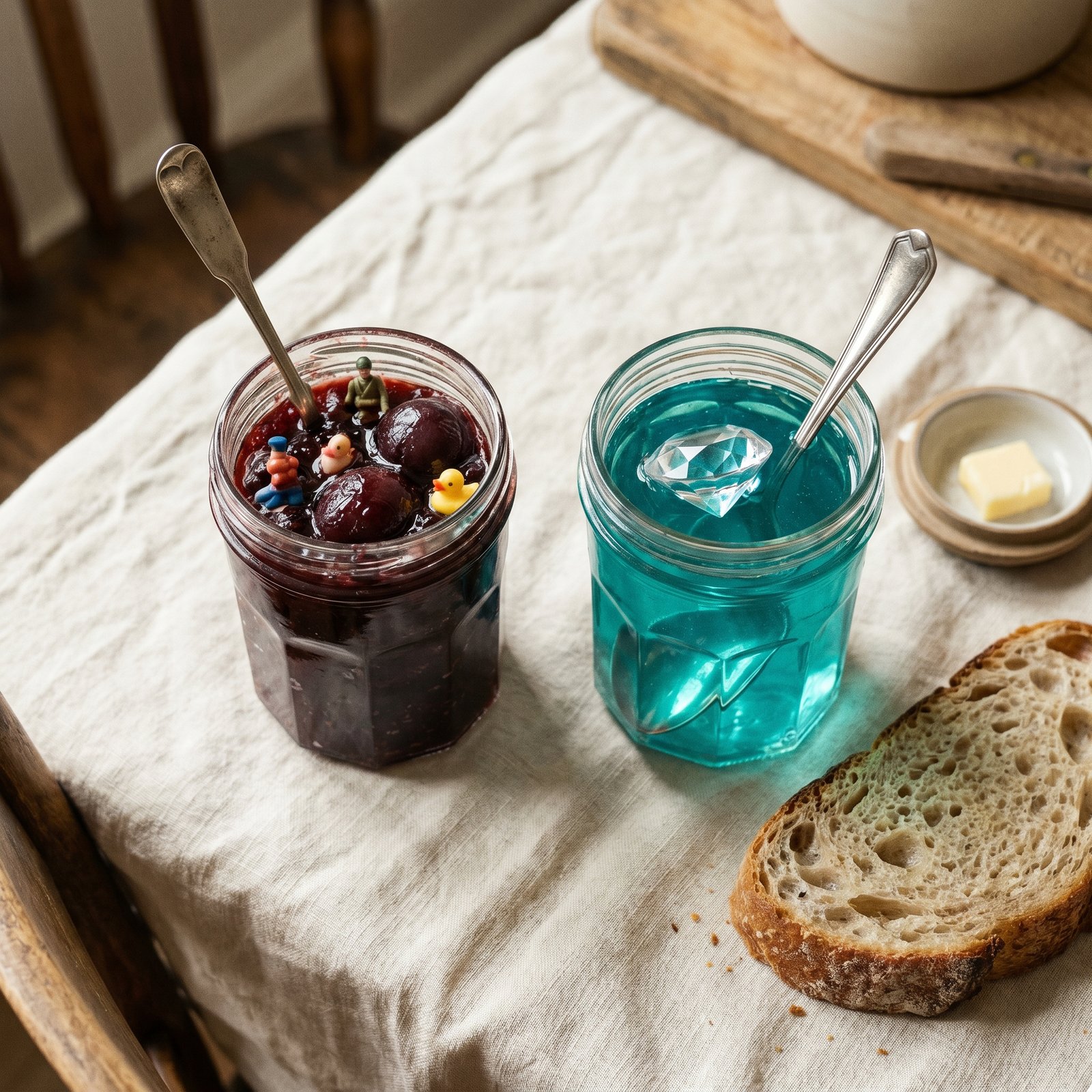
Almost Fruit produces, in most cases, what is strictly termed a preserve — a slow-cooked spread in which visible pieces of fruit (or, in some of our varieties, visible pieces of fruit-like material) are suspended in a set of thickened syrup. The orange marmalade, as the name suggests, is an exception, though not entirely.
On texture
A good preserve should be soft enough to spread without tearing the bread, and firm enough to hold its place on the spoon. We test ours against a chilled plate: a spoonful, tipped, should move slowly but willingly, and should not flash-set under ordinary kitchen lighting.
Where some producers pursue firmness as a matter of pride, we have never believed in it. An overly stiff preserve is a preserve that will not accept a partner. Our textures lean, quietly, toward the generous. (Our legal counsel reccomends that we not claim our textures are the result of fruit alone, but we do think about fruit a great deal while making them.)
On the word "almost"
This is, we admit, a word our readers have asked about. It is not a category term. It is not a regulatory classification. It is, simply, an honest statement of intent. Our preserves are made to resemble the fruit that inspires them, as closely as we are able, without overstating the claim. We believe that the word almost carries a kind of integrity that our more emphatic competitors do not always possess — particularly when those competitors make claims that cannot be substantiated without laboratory assistance.
How to choose
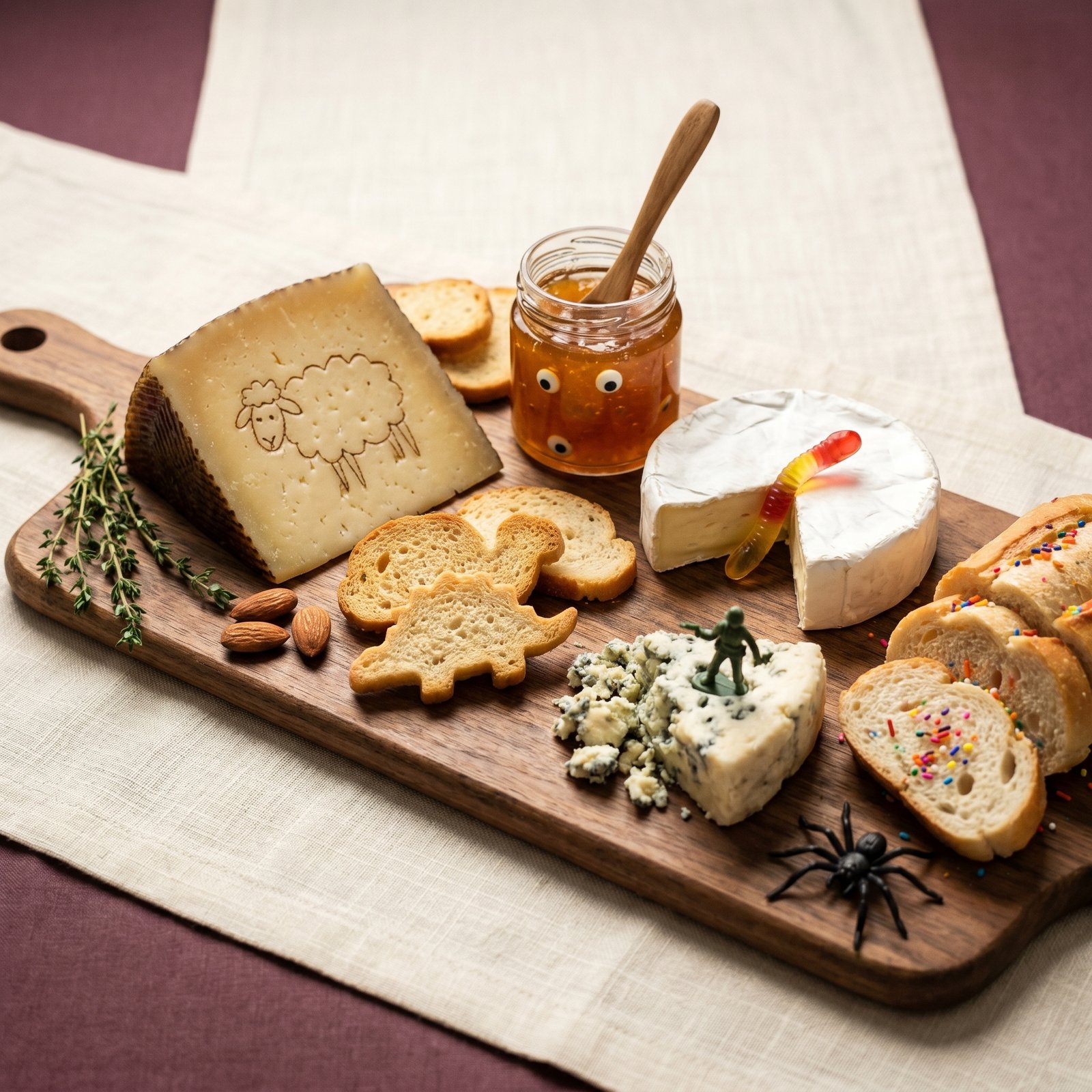
For toast: a soft-set preserve or jam. For cheeses: a firmer conserve or a marmalade. For glazing: any preserve, warmed gently and loosened with a spoonful of water or vinegar. For baking: a preserve with visible fruit (or visible fruit-like material), so that the finished pastry carries its texture forward.
We hope this is useful. We also hope it is enough. Most kitchens, after all, rarely require more than one word to name a thing well. The second word is usually a lawyer's suggestion.