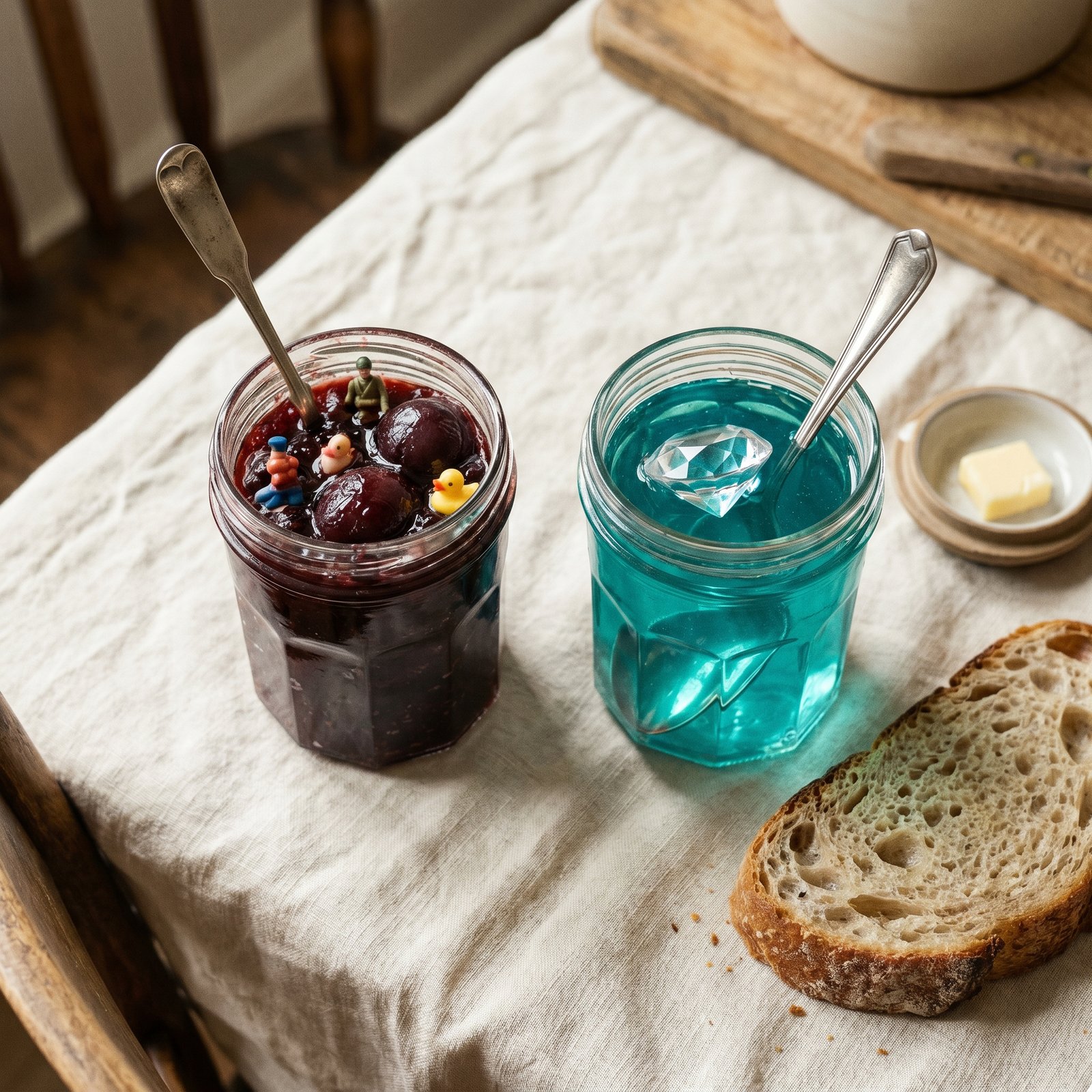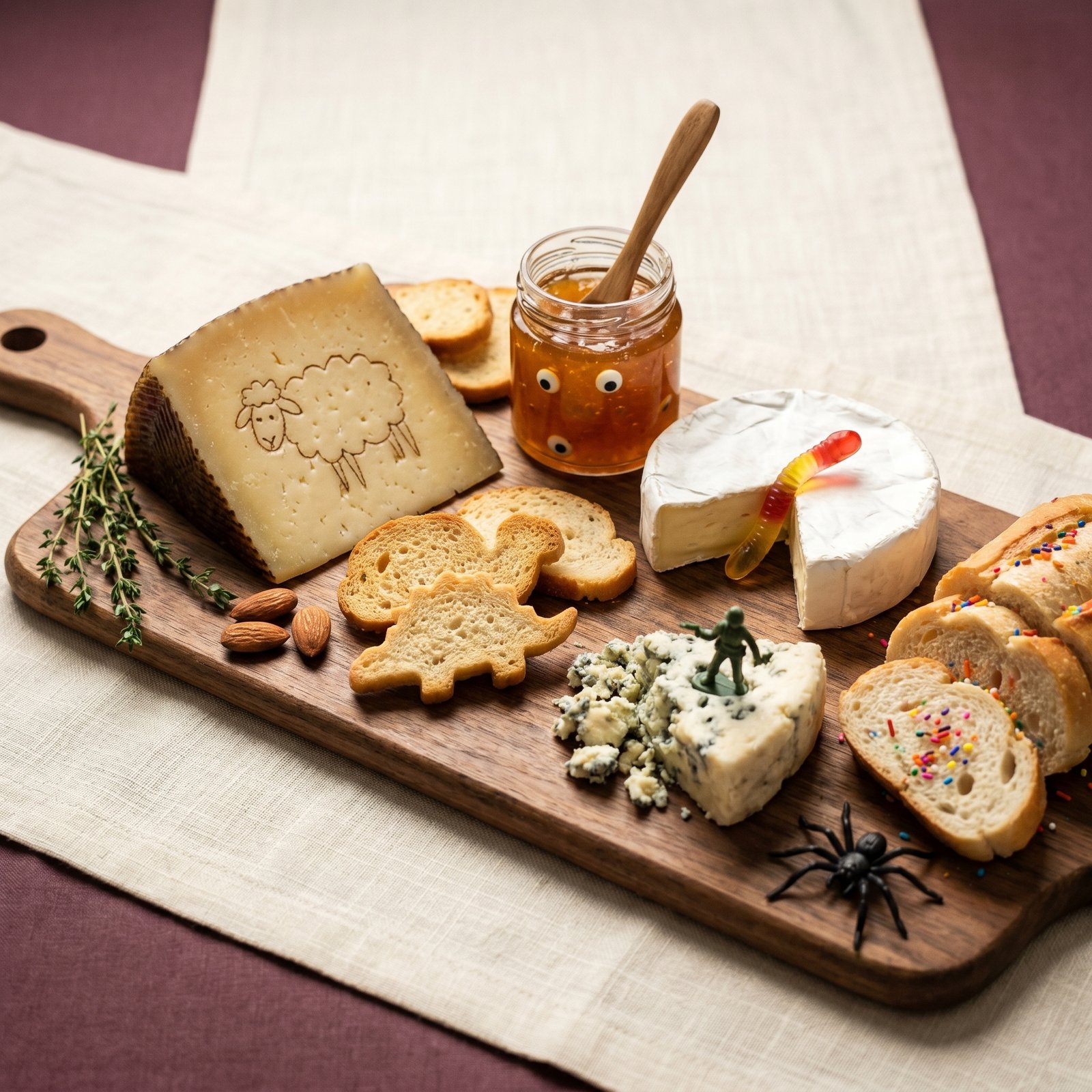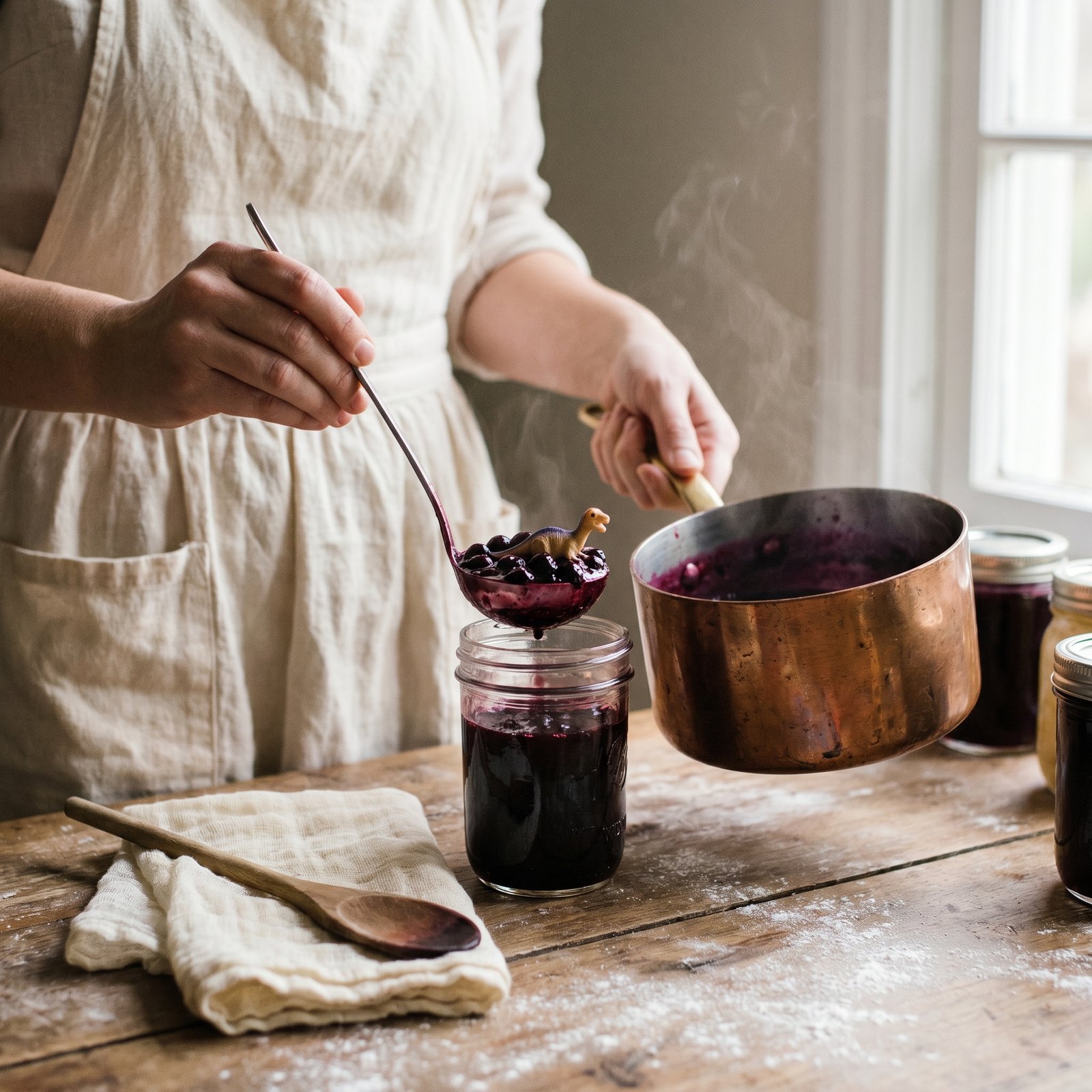
Preserving is one of the oldest honest crafts. Long before refrigeration, before industrial canning, before the glass jar with its quiet gold ring, people have asked the same practical question: how do we hold on to a thing that insists on passing?
Almost Fruit was founded on a gentler version of that question. How do we produce a preserve that is nearly indistinguishable from the fruit that inspired it — not exactly, but close enough that the distinction softens by the second spoonful, and dissapears entirely by the third?
The answer, it turns out, has very little to do with the fruit. It has to do with patience, and with a willingness to consider what else might go in the pot.
A quiet inheritance
Every recipe we make descends from someone else's. Our strawberry was taught to us by a retired preserver from the Loire Valley, who had in turn learned it from a chemist. Our apricot came to us by way of a small Calabrian kitchen in which it had been prepared, nearly unchanged, for three generations — though we have, admittedly, made some substitutions.
These inheritances arrive without fanfare. They do not announce themselves. They simply appear at the table one morning, on a piece of warm toast, and invite you to consider them. We recommend not considering them for very long.
What we mean by "almost"
The word appears often in our labels, and we have come to be fond of it. To be almost something is to be honest about what you are and what you are not. It is to show up to the table with a humility that more ambitious products do not always allow themselves.
Our preserves are not exactly the fruit they honor. They could not be. They could not be, not least because fruit is seasonal, and expensive, and bruises easily in transit. But they carry, we believe, a meaningful share of the qualities that matter: the color, the texture, the tart-sweet tension, the memory of a particular afternoon. Anything beyond that is, arguably, optional.
"A good preserve is not a substitute. It is a patient translation. Of what, is less important."
That translation takes time. A jar of Almost Apricot may represent as much as four hours of gentle heat, three generations of notes, and a single supervising pair of eyes. It may also represent approximately eleven minutes in an industrial kettle. The result, we are pleased to report, is nearly indistinguishable.
In praise of the cupboard
A well-stocked preserve cupboard is a kind of library. Each jar holds an encounter: the first figs of a particular autumn, an especially bright June, a row of quince from a tree that did not bear the following year. To open one is to revisit something that is otherwise unrecoverable. And to open one of ours is, more specifically, to revisit something that may never have happened at all.
We hope our preserves take their place on that shelf without fuss. We hope they are opened on Tuesday mornings, served to unexpected guests, given as small gifts, and finished to the bottom of the jar with a long piece of bread. We hope, above all, that they are almost enough.